
Phoenix Real Estate Market Shift: What Rising Inventory and Higher Rates Mean for You
Phoenix Real Estate Market Shift: What Rising Inventory and Higher Rates Mean for You in 2025
The Phoenix and West Valley real estate markets are experiencing significant changes. As we navigate 2025, savvy homebuyers and sellers need to understand the new dynamics shaping our local housing landscape. From mortgage rates climbing to their highest levels since October to unprecedented inventory growth, the market we knew just months ago is evolving. Let me break down what's happening and how it affects your real estate decisions.
The Perfect Storm: Mortgage Rates Hit 6.43% and Buyer Demand Falls
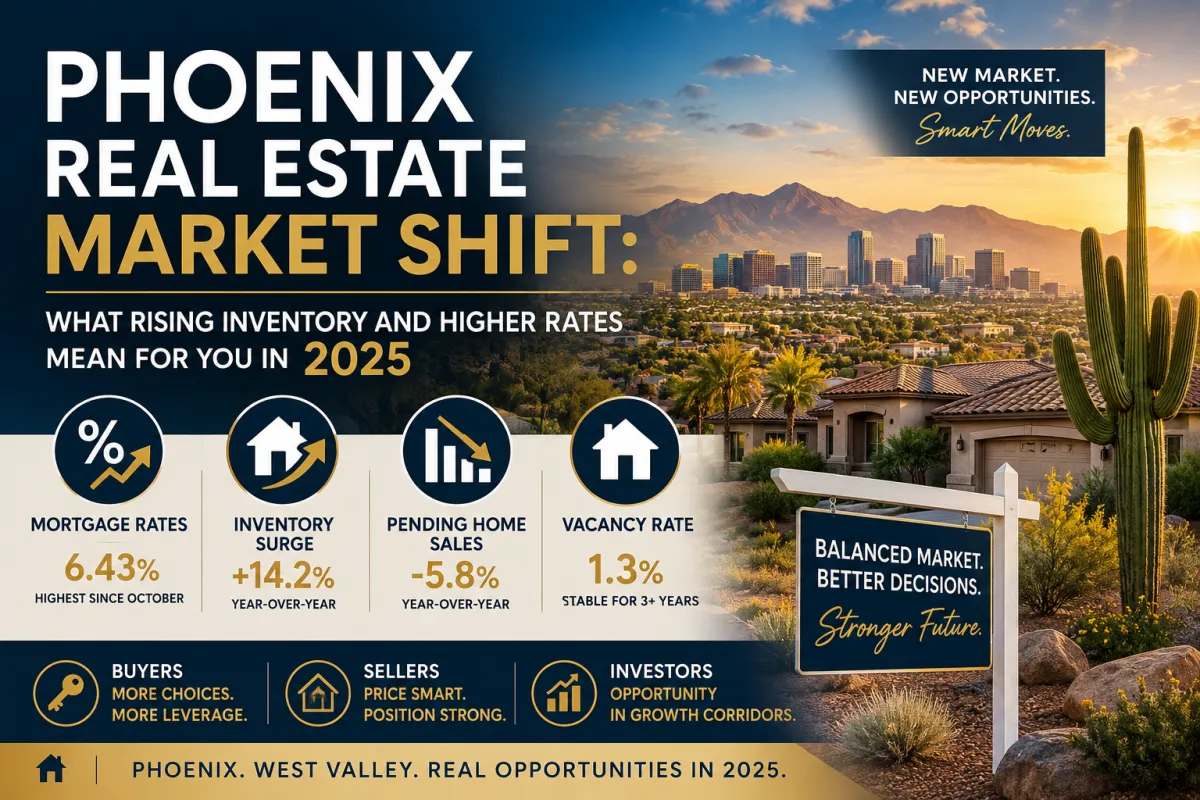
If you've been shopping for a home in Phoenix recently, you've likely felt the impact of rising interest rates. Mortgage applications have dropped 10.5% week-over-week, with rates now hovering at 6.43%—the highest point since October. This isn't just a national trend; it's directly affecting Phoenix homebuyers' purchasing power and confidence.
Here's the reality: when mortgage rates climb, monthly payments increase substantially. For example, a $400,000 home purchase costs approximately $2,100 more per month at 6.43% interest compared to rates we saw just last year. This squeeze has caused many potential buyers to pause, reassess their finances, or delay their home purchase plans entirely.
What This Means for Phoenix Homebuyers
For buyers currently in the market, this presents a paradox. Higher rates mean less buying power, but the silver lining is reduced competition. The decreased mortgage demand means fewer aggressive bidding wars in neighborhoods across Phoenix and the West Valley. If you're serious about buying now, your offer has a better chance of being accepted without an all-cash requirement or above-asking-price payment.
Impact on Sellers in the Phoenix Area
For those thinking about selling, the decline in mortgage demand signals you may face longer selling timelines. However, this doesn't mean your home won't sell—it means the market is shifting from a seller's paradise to a more balanced environment. Pricing becomes critical, and working with an experienced realtor like myself is essential to understanding your home's true market value.
Inventory Surge: A Game-Changer for the Phoenix Market
Perhaps the most significant shift is the dramatic increase in available homes. U.S. housing inventory has surged 14.2% year-over-year, reaching approximately 1.2 million listings nationwide. In the Phoenix and West Valley markets, we're seeing this trend reflected in more homes available for purchase than we've experienced in recent years.
This inventory increase is reshaping the power dynamics. For the past several years, Phoenix has been characterized as a seller's market—where limited inventory meant sellers called the shots. Now, with more options available, buyers have genuine choice again.
Why Inventory Matters in Phoenix Real Estate
Phoenix's rapid growth has historically kept inventory tight. People relocate here faster than homes are built. However, with more people listing their homes and inventory climbing, the market is finding balance. This benefits buyers who can now:
·Compare multiple properties in their desired neighborhoods
·Negotiate more favorable terms and pricing
·Take time to make informed decisions without fear of missing out
·Request inspections and appraisals without pushback
Home Prices Cooling: What Does This Mean for Phoenix?
While Phoenix hasn't experienced the dramatic price drops seen in some national markets, median home prices across the U.S. have declined in 14 major metros recently. The Phoenix and West Valley markets are showing signs of cooling after years of explosive growth.
If you purchased in Phoenix during the 2021-2023 boom, your home likely appreciated significantly. But that growth trajectory is normalizing. Rather than seeing 15-20% annual appreciation, we're witnessing a more sustainable, gradual price environment.
Is This Bad News?
Not necessarily. Market cooling doesn't equal market collapse. It means:
·Stabilization: Prices are settling at sustainable levels
·Affordability Improvement: Homes become accessible to more buyers
·Less Speculation: People buying homes to live in them, not flip them for quick profits
·Long-term Value: Phoenix fundamentals remain strong with continued population growth
Pending Home Sales Decline: A 5.8% Year-Over-Year Drop
Pending home sales have dropped 5.8% year-over-year—the largest decline in nearly a year. This metric is particularly telling because it represents homes under contract, indicating future closings. In Phoenix and the West Valley, this suggests buyer activity is indeed slowing.
However, this decline reflects the market adjustment we're experiencing. Fewer pending sales don't mean fewer eventual sales; they indicate a longer sales cycle and more deliberate buyer decision-making.
The Bright Spot: Stable Vacancy Rates Keep Phoenix Strong
While some markets are seeing inventory challenges, the U.S. home vacancy rate has remained steady at 1.3% for over three years. This stability is crucial for understanding Phoenix's market health. Consistent vacancy rates mean:
·Demand continues to match supply reasonably well
·The market isn't oversaturated with abandoned or speculative properties
·Rental rates and property values have legitimate support
·Arizona's continued population growth is filling available housing
Navigating the 2025 Phoenix Real Estate Market: What You Should Do
If You're Buying
This is actually a favorable buyer's market. With inventory up and buyer demand down, you have leverage. Get pre-approved for a mortgage before rates climb further, but don't rush. Take time to find the right property. Make reasonable offers—no need for above-asking bids anymore. Consider that refinancing may become possible if rates decline later.
If You're Selling
Price competitively from day one. Get a professional market analysis to understand your home's value in this new environment. Consider what upgrades add genuine value and what can wait. Be prepared for a longer marketing period, but don't panic—homes with proper pricing and presentation still sell in Phoenix.
If You're Investing
The West Valley continues to offer opportunities for investment-minded buyers. Suburban growth corridors in areas like Buckeye, Goodyear, and Queen Creek show resilience. Rental demand remains strong due to our continued population influx.
The Bottom Line: Phoenix's Market is Maturing, Not Collapsing
The confluence of declining mortgage demand, rising interest rates, increased inventory, and cooling prices might sound alarming. But for Phoenix, this represents market maturation. We're transitioning from an artificial scarcity-driven market to one based on genuine supply, demand, and affordability fundamentals.
Phoenix remains one of America's most dynamic real estate markets. People still want to move here. Our economy continues growing. Population increases show no signs of slowing. What's changing is the pace and the players—and that's healthy.
Ready to Navigate the New Phoenix Market?
Whether you're buying, selling, or investing in the Phoenix or West Valley real estate market, understanding these trends is essential. As your local realtor with deep knowledge of our communities, I'm here to help you make informed decisions in this evolving landscape.
Contact Shandelin Anderson today for a consultation. Let's discuss how this market shifts affect your real estate goals and create a strategy that works in 2025's balanced market conditions.