5 Real Estate Trends Shaping the Phoenix & West Valley Market in 2026
5 Real Estate Trends Shaping the Phoenix & West Valley Market in 2026
## 1. Water Supply Issues: The Critical Factor Reshaping Phoenix Real Estate
Arizona's water future is more than just a headline—it's fundamentally changing how buyers evaluate Phoenix and West Valley properties. With anticipated cuts to Phoenix's Colorado River water supply, savvy real estate investors and homebuyers are increasingly scrutinizing the sustainability of their potential investments. This isn't a distant concern; it's happening now, and it's directly impacting property values across the region.
The Colorado River has been the lifeblood of Arizona's growth for over a century, but climate change and prolonged drought conditions have forced difficult conversations about conservation and allocation. Lake Mead and Lake Powell water levels have declined significantly, triggering mandatory cuts that will affect Phoenix's water supply beginning in 2026. For real estate professionals like myself, understanding these implications is crucial to guiding clients toward smart, sustainable investments.
Buyers are actively searching for properties with these considerations in mind:
·**Homes with water-efficient landscaping and xeriscaping** that reduce outdoor water consumption
·**Properties with smart irrigation systems** and modern water management technology
·**Neighborhoods with established water conservation programs** and community sustainability initiatives
·**Homes positioned in areas with long-term water security** and municipal infrastructure investments
The properties that are appreciating fastest aren't just beautiful homes—they're resilient homes. West Valley communities like Buckeye and Goodyear are investing heavily in water reclamation facilities and sustainable development practices, making them increasingly attractive to environmentally conscious buyers. Meanwhile, older Phoenix neighborhoods without robust water conservation infrastructure may face longer-term challenges. This doesn't mean they're bad investments, but smart buyers are asking the right questions about municipal water planning and property-level conservation features.
If you're considering a move to the Phoenix or West Valley area, water sustainability should be on your due diligence checklist. I always recommend that my clients understand their specific neighborhood's water future and the developer's or municipality's long-term water strategy.
## 2. Housing Market Price Trends: Phoenix's Stabilizing Market Creates Opportunity
After years of dramatic price appreciation, Phoenix's housing market has entered a new phase: stabilization. The median home price in the Phoenix metro area has settled around $405,689, reflecting a modest 1.5% decrease over the past year. While some might interpret this as concerning, experienced investors know that stabilization often creates the best buying opportunities.
This price trend is incredibly significant because it represents market maturation. Unlike the volatile appreciation of the last few years, today's market rewards informed decision-making and strategic timing. For buyers who missed the peak appreciation years, the current stabilization presents a golden opportunity to enter the market without overpaying. For sellers, it's a reminder that pricing strategy matters more than ever.
Key features of Phoenix's current market dynamics include:
·**Increased buyer negotiating power** compared to the seller's market of 2021-2022
·**Longer average days on market** for properties, allowing time for proper due diligence
·**Regional variations in pricing** with West Valley growth areas showing stronger appreciation than central Phoenix
·**Favorable conditions for first-time homebuyers** who can now compete more effectively
The stabilization is geographically nuanced. While the Phoenix metro average shows slight decline, the West Valley—particularly Buckeye, Goodyear, and Avondale—is experiencing continued appreciation due to new construction and population migration. This creates interesting opportunities for investors: established Phoenix neighborhoods might offer value, while West Valley properties provide growth potential.
From a real estate perspective, this stabilized market rewards knowledge. Properties that are well-maintained, competitively priced, and in desirable neighborhoods are still moving quickly. Overpriced properties linger. This shift favors buyers and sellers who work with experienced professionals who understand local micro-markets.
## 3. New Construction and Housing Inventory: The West Valley Boom
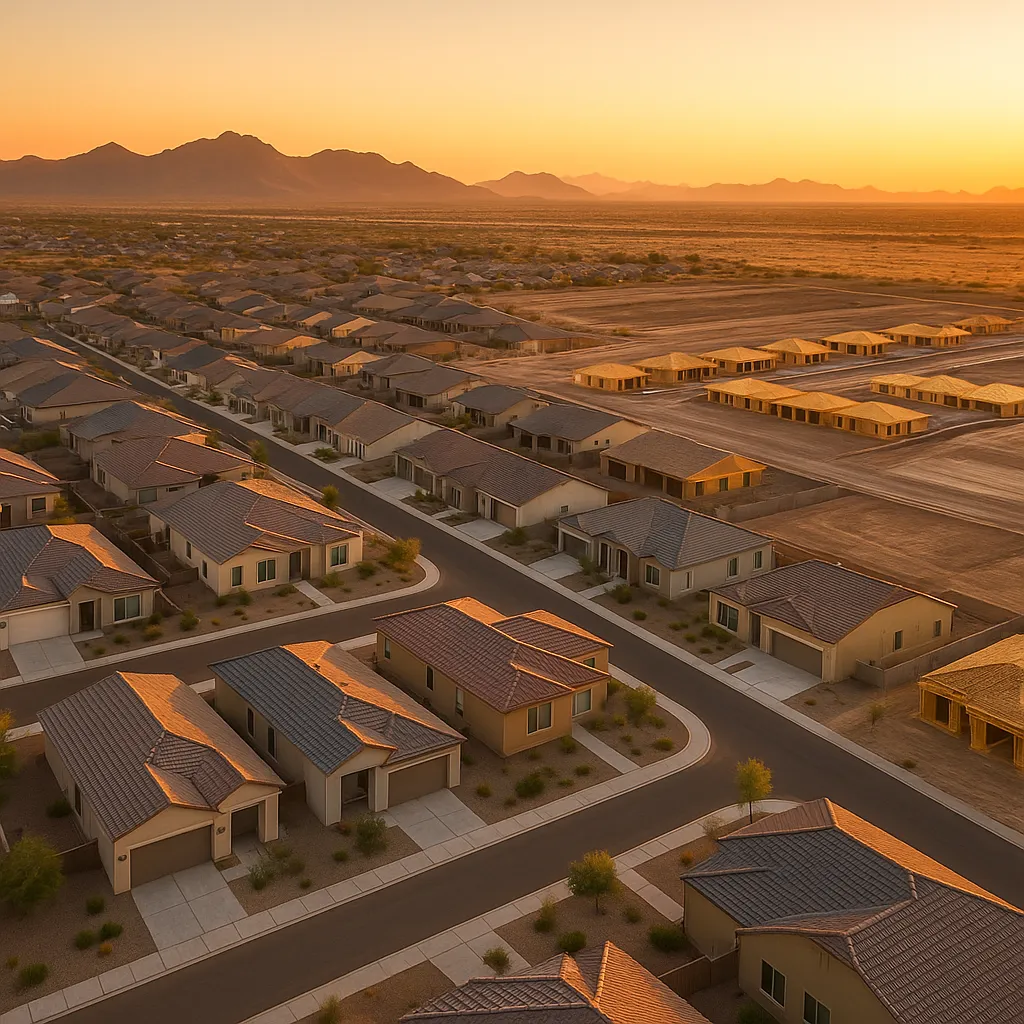
The Phoenix housing market's future is being built right now, particularly in the West Valley. Areas like Buckeye and Goodyear are experiencing unprecedented construction booms, with developers bringing thousands of new homes to market. This surge in new construction is fundamentally reshaping inventory levels, pricing dynamics, and the overall character of the West Valley.
Why is the West Valley experiencing such explosive growth? The answer combines affordability, space, and strategic planning. West Valley communities are offering larger lots, newer homes with modern amenities, and significantly lower price points compared to central Phoenix or established Scottsdale neighborhoods. For families and investors seeking value, the West Valley has become the obvious choice.
The ideal features of new West Valley construction include:
·**Open floor plans** designed for modern living with flexible spaces for remote work
·**Energy-efficient systems and smart home technology** that reduce utility costs
·**Planned community amenities** including parks, pools, fitness centers, and entertainment spaces
·**Master-planned neighborhoods** with cohesive architecture and long-term development vision
New construction inventory is actively reshaping market dynamics in important ways. Builders like Lennar, KB Home, and local Arizona developers are bringing homes online regularly, which increases buyer options and moderates price pressure. However, this inventory surge is specifically concentrated in West Valley corridors along the I-10 and I-303. Central Phoenix and established east Phoenix neighborhoods have much tighter inventory, which means pricing there remains strong and competition among buyers remains intense.
For buyers, the West Valley boom offers unprecedented choice and value. For investors, it represents genuine growth potential as these communities mature and build out supporting infrastructure like shopping, dining, and employment centers. The next 24-36 months will be critical for West Valley real estate—early investors in high-quality developments will likely see significant appreciation as demand continues to outpace supply.
## 4. Multifamily Housing Market Dynamics: Where Investment Capital is Flowing
Arizona's multifamily housing market is experiencing a significant shift, with the Phoenix and West Valley regions emerging as prime targets for major development. This isn't just about apartment construction—it represents a fundamental change in how people are choosing to live in Arizona, and it's creating ripple effects throughout the entire real estate market.
Multifamily development signals economic confidence. When major developers and investment firms commit capital to apartment and condo projects, they're betting on continued population growth, job creation, and sustained demand. In Phoenix, that confidence is showing up in projects across Roosevelt Row (in downtown Phoenix) and throughout the West Valley, including projects in Goodyear, Avondale, and Buckeye.
The multifamily boom is characterized by:
·**Mixed-use developments** combining residential apartments with retail, dining, and entertainment
·**Luxury amenities** including coworking spaces, rooftop gardens, and fitness centers
·**Sustainable design** with water conservation, solar integration, and efficient building systems
·**Strategic locations** near employment centers, transit corridors, and emerging retail districts
Why should single-family homebuyers care about multifamily development? Because it signals neighborhood growth and investment. When a major developer builds a 200-unit luxury apartment complex nearby, it typically means increased commercial development, better restaurants and retail options, and improved infrastructure. Additionally, multifamily projects create construction jobs and long-term service jobs, strengthening local employment.
For investors specifically, the multifamily boom is worth monitoring because it indicates future neighborhood trajectories. If you're considering a single-family rental investment in a neighborhood where major multifamily projects are breaking ground, you might be looking at an emerging hot market with strong rental demand and appreciation potential.
## 5. Commercial Real Estate Developments: Building the West Valley's Economic Future
Commercial real estate expansion in Phoenix and the West Valley isn't just creating office parks and shopping centers—it's fundamentally reshaping where people work, shop, and build lives. This wave of commercial development is particularly intense in the West Valley, where industrial parks, retail centers, and office complexes are transforming the landscape and supporting residential growth.
The relationship between commercial and residential real estate is symbiotic. As companies establish operations in Goodyear, Buckeye, and Avondale, workers want to live nearby. Shorter commutes mean better quality of life, which drives residential demand. Smart investors recognize that commercial development is often a leading indicator of residential appreciation.
Key commercial developments reshaping the West Valley include:
·**Industrial and logistics centers** supporting e-commerce distribution and manufacturing
·**Retail and mixed-use centers** bringing jobs and shopping options to growing communities
·**Office parks and business campuses** attracting companies seeking lower costs than central Phoenix
·**Healthcare and education facilities** supporting growing populations
The West Valley's commercial boom is unprecedented. Major employers like Amazon, Walmart, and regional companies are establishing significant operations in these areas, creating tens of thousands of jobs. This employment growth is the engine driving West Valley residential real estate appreciation.
For homebuyers, this means the West Valley is transitioning from primarily bedroom-community status to a genuine economic hub. Commute times are shortening, job opportunities are multiplying, and the region is developing genuine community character beyond just "affordable suburb."
## Putting It All Together: What This Means for You
These five trends are interconnected in ways that create both challenges and extraordinary opportunities in the Phoenix and West Valley real estate markets. Water sustainability concerns are driving demand for newer construction with water-efficient features—which is exactly what West Valley builders are delivering. Stabilizing prices combined with new inventory means buyers have genuine leverage and choice. The multifamily and commercial booms signal robust economic health and future appreciation potential.
For buyers, the message is clear: the West Valley represents exceptional value and growth potential, but due diligence around water sustainability and neighborhood fundamentals is essential. For sellers in established Phoenix neighborhoods, the current stabilized pricing environment rewards properties that are well-positioned, maintained, and competitively priced.
The Phoenix and West Valley real estate markets in 2026 reward informed decision-making. This isn't a market for blind investment or emotional purchases. It's a market where understanding local trends, asking the right questions, and working with experienced professionals makes the difference between good outcomes and great outcomes.
## Ready to Find Your Phoenix Dream Home?
Whether you're a first-time buyer exploring the exciting new communities of Buckeye and Goodyear, a seasoned investor evaluating West Valley growth potential, or someone relocating to Phoenix seeking the perfect neighborhood, the current market offers genuine opportunities. But opportunity only favors those prepared to recognize it.
The real estate landscape is shifting beneath our feet—not dramatically or dangerously, but meaningfully. Understanding these five trends positions you to make smarter decisions about where to invest, what to prioritize in a property search, and how to think about your long-term real estate goals.
Contact Shandelin Anderson, REALTOR today for a personalized consultation. I'll help you navigate these market trends, understand what they mean for your specific situation, and identify the properties and neighborhoods that align with your goals and values. Whether you're buying, selling, or investing, your dream Phoenix or West Valley home is waiting—and I'm here to help you find it.