
5 Real Estate Trends Shaping Phoenix & West Valley Homes in 2026
5 Real Estate Trends Shaping Phoenix & West Valley Homes in 2026
The real estate market in Phoenix and the West Valley is experiencing unprecedented change. Whether you're a first-time homebuyer, an experienced investor, or someone considering a move to Arizona, understanding the trends shaping our market is essential. As we navigate through 2026, several significant factors are influencing how we buy, sell, and think about homes in the Valley of the Sun. Let's explore the five most important real estate trends you need to know about.
## 1. Interest Rate Changes and Housing Affordability: Navigating the New Normal
The impact of fluctuating interest rates continues to be one of the most pressing concerns for homebuyers across the nation, and Phoenix is no exception. Recent interest rate volatility has created both challenges and opportunities in our local market. When mortgage rates increase, even by a fraction of a percent, the monthly payment on a home can rise significantly, affecting how much home you can actually afford.
In the Phoenix and West Valley area, these interest rate changes directly influence mortgage rates offered by local lenders, which can substantially impact your purchasing power. If you were pre-approved for a $400,000 home at 6% interest just months ago, a jump to 7% could reduce your purchasing power to around $375,000—all while home prices haven't necessarily decreased. This dynamic is reshaping buyer behavior and creating urgency in some segments of the market.
The ideal features for today's budget-conscious Phoenix buyers include:
·**Homes with existing solar installations** that can reduce monthly utility costs, offsetting higher mortgage payments
·**Efficient floor plans under 2,500 square feet** that maximize value without requiring larger mortgages
·**Properties in up-and-coming West Valley neighborhoods** where prices remain more affordable than established Scottsdale or Paradise Valley areas
·**Homes with the potential for rental income** through accessory dwelling units or casitas, helping owners manage monthly expenses
Understanding these rate dynamics allows smart buyers to make strategic decisions. Some are choosing to lock in rates sooner rather than later, while others are adjusting their expectations and targeting properties in value-rich neighborhoods like Buckeye, Litchfield Park, or Sun City West. The key is working with a knowledgeable real estate professional who understands how interest rates affect your specific situation and can help you time your purchase wisely.
## 2. Remote Work Revolution: Why Phoenix Homes Are Now More Desirable
The remote work phenomenon has fundamentally transformed what people want in a home. Gone are the days when homebuyers prioritized proximity to downtown office buildings above all else. Today's professionals are seeking homes that support their work-from-anywhere lifestyle, and Phoenix's suburban and West Valley communities are perfectly positioned to meet this demand.
The Phoenix and West Valley region has seen a dramatic surge in interest from remote workers relocating from coastal cities. They're escaping high costs of living and drawn to our affordable housing, year-round sunshine, and growing community amenities. But it's not just about the location—it's about the physical space itself. Remote workers need dedicated home offices, reliable internet infrastructure, and the kind of room that allows them to maintain professional boundaries between work and personal life.
The ideal features for remote-work-friendly Phoenix homes include:
·**Dedicated home office spaces** with separate entrances, doors that close, and windows for natural light
·**High-speed internet infrastructure** with fiber-optic availability or excellent broadband coverage
·**Multiple rooms beyond bedrooms** to serve as flexible office, creative, or hobby spaces
·**Outdoor living areas** including patios, pools, or courtyards for breaks and mental refreshment
Properties in West Valley communities like Avondale, Goodyear, and Surprise are experiencing particularly strong demand from remote workers. These areas offer larger lot sizes, more affordable pricing, newer construction with modern home office capabilities, and excellent planned communities with amenities. A 4,000-square-foot home with a dedicated office suite, bonus room, and resort-style backyard that might cost $800,000 in Scottsdale could be available for $500,000-$600,000 in some West Valley neighborhoods.
This trend isn't slowing down. As companies continue remote-first policies and location-flexible arrangements become standard, we expect continued strong demand for homes that facilitate productive work-from-home environments.
## 3. Sustainability and Green Building: The Arizona Advantage
Arizona's intense heat and abundant sunshine make sustainability more than an environmental choice—it's an economic one. Homebuyers in Phoenix and the West Valley are increasingly prioritizing energy-efficient homes and sustainable building practices, recognizing that green features can significantly reduce utility costs in our hot desert climate.
The growing awareness of environmental issues has made sustainable building practices a focal point for developers and homebuyers alike. In a state where summer cooling bills can exceed $300-400 monthly, the appeal of energy-efficient construction is compelling. Beyond the immediate cost savings, buyers recognize that sustainable homes are future-proof investments that will appeal to subsequent buyers and may qualify for tax incentives or rebates.
Key sustainable features increasingly demanded in Phoenix area homes:
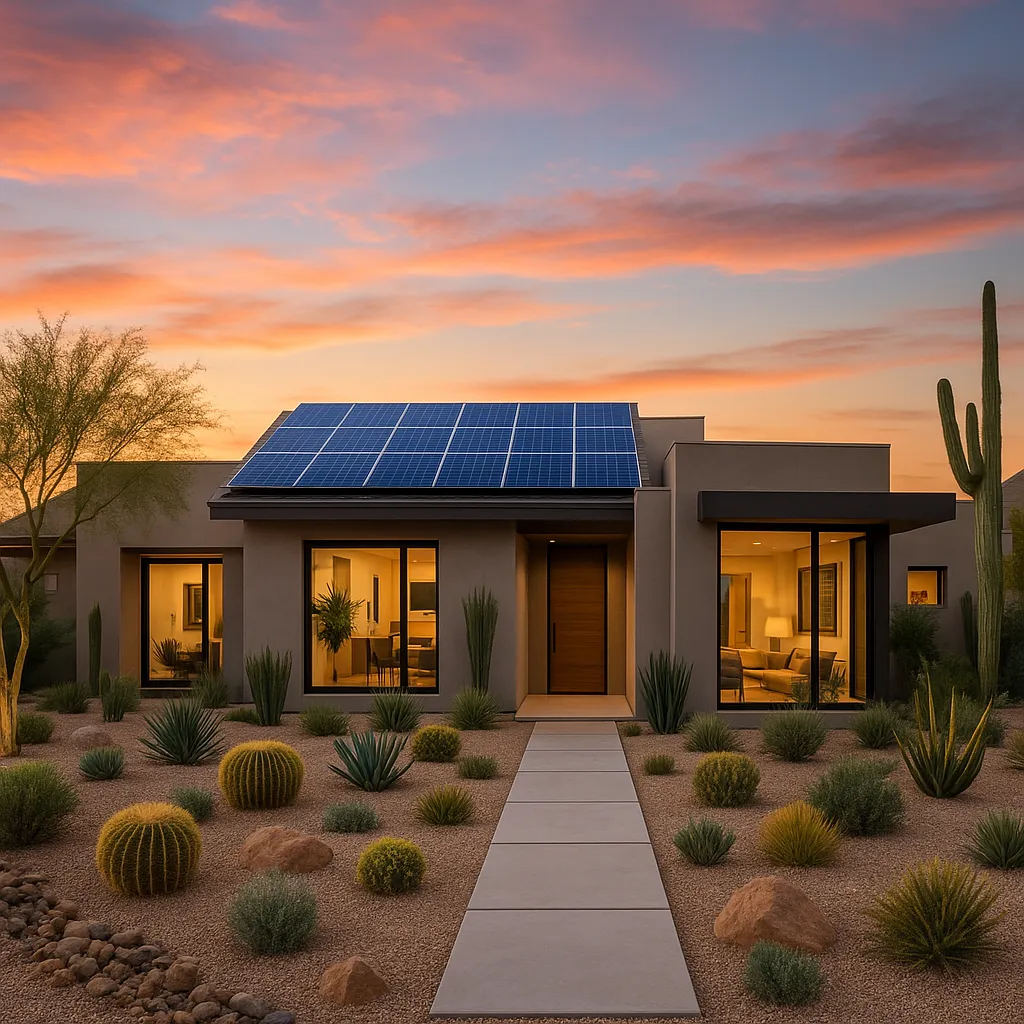
·**Solar panel systems** (rooftop or newer integrated designs) that can eliminate or dramatically reduce electric bills
·**Cool roofing materials** with high solar reflectance that reduce heat absorption and cooling costs
·**Energy-efficient HVAC systems** with smart thermostats that learn your patterns and optimize temperature automatically
·**Low-flow water fixtures and xeriscaping** that reduce water consumption—a precious resource in Arizona
Phoenix's forward-thinking builders are responding to this demand. New construction communities are incorporating solar as standard rather than optional, implementing smart home technology for energy management, and using sustainable building materials. Even in resale homes, buyers are willing to pay premiums for existing solar installations or homes that can easily accommodate them.
From a regulatory perspective, Arizona's evolving building codes increasingly require energy efficiency standards. Properties meeting these standards not only operate at lower costs but may also qualify for favorable financing terms or tax credits. This trend means that homes designed with sustainability in mind today will be the most desirable—and valuable—homes on the market tomorrow.
## 4. Technological Innovations: Making Real Estate Transactions Seamless
Technology is revolutionizing how we buy, sell, and experience real estate. Virtual tours, 3D walkthroughs, drone photography, and blockchain-based secure transactions are transforming the real estate industry, making the process faster, more transparent, and more accessible than ever before.
In Phoenix and the West Valley, adopting these technologies has become essential for competitive real estate professionals. Virtual tours allow out-of-state remote workers to explore homes from their current locations, dramatically expanding the potential buyer pool for Phoenix properties. Drone photography showcases properties and neighborhoods in ways traditional photos simply cannot, highlighting the desert landscape, community amenities, and proximity to development projects.
Key technological innovations transforming Phoenix real estate transactions:
·**Immersive virtual tours and 3D walkthroughs** that let buyers explore homes at their convenience from anywhere
·**High-resolution drone photography** showing properties, neighborhoods, and surrounding infrastructure
·**Digital transaction management** with secure blockchain-based documentation and e-signatures
·**AI-powered market analysis tools** providing real-time data on comparable sales, market trends, and price predictions
These technologies are particularly valuable in our market, where properties are attracting national attention from remote workers and investors. A buyer in New York can take a detailed virtual tour of a West Valley home, review market data, and make an informed decision before ever stepping foot in Arizona. This capability has opened the market to a much wider audience and accelerated transaction timelines significantly.
Smart home technology integration is also becoming standard expectation rather than luxury feature. Homes with smart thermostats, security systems, lighting, and irrigation are more attractive to tech-savvy buyers and command premium prices. As millennials and Gen Z buyers—who've grown up with technology—enter the market, these expectations will only intensify.
## 5. Urban Development and Infrastructure: Building the Phoenix of Tomorrow
Major infrastructure projects and urban development initiatives are reshaping Phoenix and West Valley landscapes in ways that directly impact property values, neighborhood appeal, and investment potential. New transportation systems, commercial hubs, and community developments are creating entirely new desirable areas while revitalizing existing neighborhoods.
In the West Valley specifically, substantial development is underway. The expansion of Loop 303, improvements to I-10 corridors, and new commercial centers in Goodyear and Avondale are creating modern infrastructure that attracts businesses, residents, and investment. These developments aren't just improving traffic flow—they're fundamentally changing which neighborhoods are considered "up-and-coming" and influencing where smart investors are putting their money.
Infrastructure developments creating Phoenix real estate opportunities:
·**Transportation expansion projects** like Loop 303 improvements that reduce commute times and increase property accessibility
·**Mixed-use commercial and residential developments** creating walkable communities with retail, dining, and entertainment
·**Technology and innovation hubs** attracting companies and high-wage earners to specific Phoenix neighborhoods
·**Public amenities** including parks, schools, and recreation facilities that increase neighborhood desirability
Properties near major infrastructure projects often experience appreciation as the projects near completion. A home in Avondale near new Loop 303 improvements or commercial development may see significant value increase once those projects are finished and the area becomes more accessible and desirable. Smart buyers and investors are studying development pipelines to identify neighborhoods on the cusp of transformation.
The Phoenix metro area's continued growth means ongoing development throughout the West Valley. Understanding where these projects are headed helps you make strategic real estate decisions, whether you're buying a primary residence, an investment property, or looking to relocate to a rapidly appreciating area.
## Putting It All Together: What This Means for You
These five trends—interest rate dynamics, remote work demand, sustainability expectations, technological innovation, and infrastructure development—don't exist in isolation. They're interconnected forces reshaping the Phoenix and West Valley real estate market in profound ways.
The ideal Phoenix home in 2026 combines several of these elements: an affordable property in a West Valley community experiencing infrastructure development, featuring a dedicated home office for remote work, equipped with solar panels and energy-efficient systems, showcased through immersive virtual tours to reach national buyers. This home meets the needs of today's buyer while appreciating in value as surrounding development completes.
Whether you're looking to buy, sell, or invest, recognizing these trends empowers you to make strategic decisions aligned with market direction. A home that checks multiple trend boxes—sustainability features, remote work capability, proximity to development—represents a smarter investment with broader appeal and stronger future appreciation potential.
The Phoenix real estate market is dynamic and full of opportunity. These trends represent the future, and the best time to act on them is now, before prices reflect the full market recognition of these shifts.
## Ready to Find Your Phoenix Dream Home?
The Phoenix and West Valley real estate market is moving quickly, and these trends mean opportunity for those who understand them. Whether you're a remote worker seeking the perfect home office, a buyer concerned about affordability, an investor seeking appreciation potential, or simply someone ready for a change, the time to act is now.
This is where personalized guidance becomes invaluable. A real estate professional who understands how these five major trends intersect in our local market can help you navigate options, identify properties with the strongest potential, and position you to make confident decisions.
Contact Shandelin Anderson, REALTOR today for a personalized consultation. Together, we'll explore how these trends create opportunities for your specific goals. Whether you're buying your first Arizona home, upgrading to accommodate remote work, seeking sustainable features, or investing in appreciating West Valley properties, we'll use market insights and local expertise to guide you to the perfect home. Your dream Phoenix home is waiting—let's find it together.